


Featured
STANISLAV ZÁMEČNIK PRIZE 2025-2026 awarded to Mr Daan de Leeuw

STANISLAV ZÁMEČNIK PRIZE 2025-2026
The jury of the Stanislav Zámečník prize awarded by the CID, chaired by Professor Sybille Steinbacher,
has unanimously selected in this edition that Mr DAAN DE LEEUW has been awarded for his work entitled
"The Geography of Slave Labor: Dutch Jews and the Third Reich (1942-1945)".
The award ceremony will take place at the Ludwig-Thomas-Haus in Dachau on Thursday, April 30
.
“Every time they transferred you, you did not know what was going to happen to you. Really very frightening.”
Looking back on her imprisonment in six German concentration and annihilation camps, Debora van Praag, a Jewish deportee from the Netherlands, recalled that transfers between incarceration sites instilled fear among the inmates, in particular among Jews who were aware of the gas chambers. Most prisoners endured multiple camps during their incarceration as the Germans moved inmates from one site to another to deploy prisoner labor wherever it was needed for the war industry.
In his doctoral thesis The Geography of Slave Labor: Dutch Jews and the Third Reich, 1942-1945, Daan de Leeuw examines how Dutch Jewish slave laborers experienced these frequent relocations, and how they managed life in the concentration camps. Focusing on over 230 Jews deported from the Netherlands, his study reconstructs their routes through the SS camp system. Tracking individuals through time and space lays bare a plethora of pathways and uncovers the disintegration of groups of prisoners. While deportees on the same train arrived together at a site, they were soon dispersed through ongoing selections and displacements. The Geography of Slave Labor probes the reasons behind diverging trajectories and the impact of relocations upon the inmates. De Leeuw applies geographical methods to visualize prisoner routes, providing a novel perspective to better grasp this key aspect of the Nazi concentration camps. Drawing on survivor testimonies, this study also analyzes social dynamics among inmates. In an environment ruled by terror and prisoners frequently on the move, ties with fellow inmates were critically important. Finally, The Geography of Slave Labor sheds light on the role of luck, chance, and fortuitous circumstances in prisoners’ lives and survival.
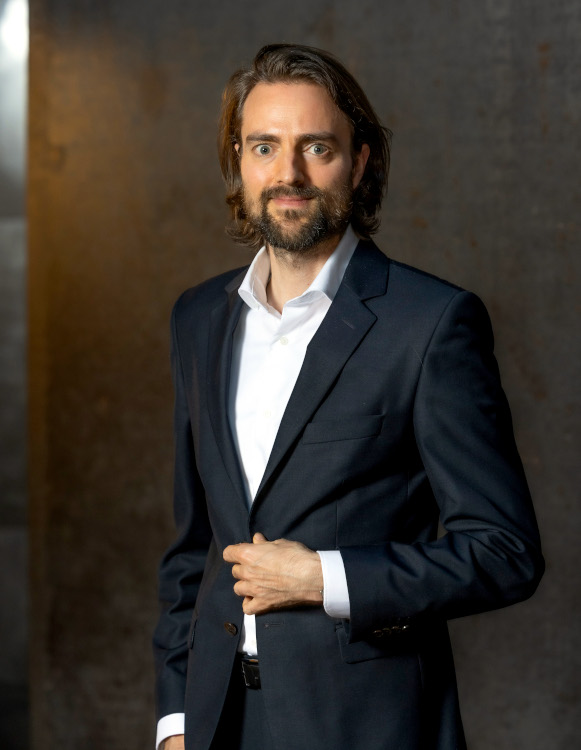 Image: Claims Conference
Biography
Daan de Leeuw is a Postdoctoral Researcher at the Department of Art & Culture, History, and Antiquity at the Vrije Universiteit Amsterdam with the project “The Holocaust in ‘the Provinces’: Local Dynamics in the Nazi-Occupied Netherlands (1925-1950).” His primary research areas include the Holocaust, the Third Reich, Nazi concentration camps, and genocide.
De Leeuw received his PhD in history from the Strassler Center for Holocaust and Genocide Studies at Clark University, Worcester, United States, for his dissertation “The Geography of Slave Labor: Dutch Jews and the Third Reich, 1942-1945.” In his thesis, he analyzes Jewish slave labor during the Holocaust, researching the victims’ experiences from a spatial perspective. De Leeuw holds a BA (cum laude) and MA (cum laude) in history from the University of Amsterdam. Prior to his doctoral studies, de Leeuw worked at NIOD Institute for War, Holocaust and Genocide Studies in Amsterdam as research assistant and as Project Manager of EHRI (European Holocaust Research Infrastructure).
De Leeuw has held fellowships at Yad Vashem, the Center for Holocaust Studies at the Institute for Contemporary History (IfZ), EHRI, the United States Holocaust Memorial Museum, and the Vienna Wiesenthal Institute for Holocaust Studies. In addition, his research has been supported by the Conference on Jewish Material Claims Against Germany which bestowed him a Saul Kagan Fellowship in Advanced Shoah Studies, the Memorial Foundation for Jewish Culture, the Dutch Cultuurfonds, and the American Academy for Jewish Research.
Ever since his teenage years, de Leeuw has developed a deep human and academic interest in the history of the Third Reich and the persecution of European Jews. The question of how states and individuals are capable of committing genocide guides his research. He has visited numerous former concentration camps over the years, including Dachau, to enhance his understanding of these sites of terror and the role they played in the Nazi dictatorship. Deeply committed to research and education, de Leeuw is dedicated to keeping the memory of the Holocaust and the Nazi past alive, thereby honoring the victims.
